Mission ― To help solve humanity’s main survival challenges in one generation (2020-2050)
Vision ― To create a vibrant, global innovation ecosystem for sustainability
4Revs GIH started in 2020
4Revs Global Innovation Hub focuses on generating business-driven innovation in four areas – food, water, resources & ecosystems, energy and climate, the four survival challenges faced by humanity. Our aim is to link Japan to innovators across the world and establish the APAC region’s leading hub for sustainability innovation.

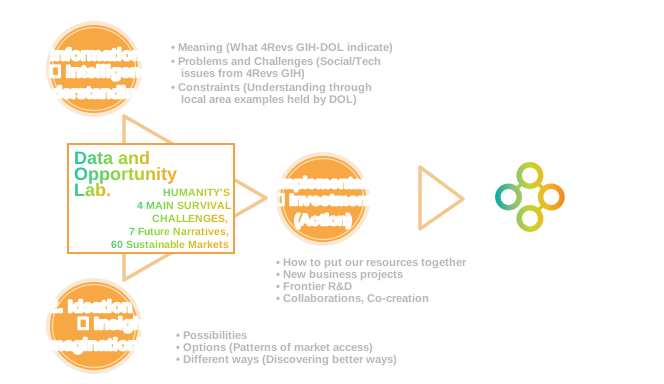
About 4Revs GIH D&O Lab
Companies participating in 4Revs GIH use the 4Revs GIH D&O Lab to explore and develop new business opportunities, build alliances, search for global M&A opportunities, and for frontier R&D.
The Lab contains our seven future narratives under which 60 global markets have been identified. Under each narrative, or within each individual market, start-ups, related VC funds, and core technologies from across the globe can be accessed.
By leveraging D&O Lab data through the I3 (I cubic) flow we generate continuous co-creation:
- —1. Information & Sustainable Business Intelligence
- —2. Ideation & Global Insights
- —3. Implementation & Investment
7 Future Narratives (Short ver.)
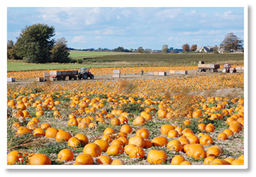
Moving from extractive, input-heavy agriculture to regenerative, circular, and equitable food systems. Focus on soil health, local resilience, food upcycling, nutrition security, and reversing food loss and waste. Farmers, corporations, and communities co-create solutions that restore ecosystems while feeding the world.
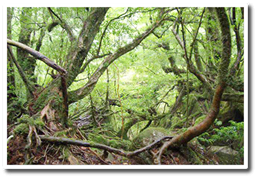
Shifting from exploitation of forests, water, soils, and biodiversity toward nature-positive practices. Investment in ecosystem services, watershed management, reforestation, and biodiversity corridors ensures that natural capital is regenerated rather than depleted.
Reimagining industrial systems as living ecosystems. Factories and supply chains emulate forest principles: diversity, resilience, closed loops, and mutual benefit. Manufacturing and infrastructure become regenerative rather than destructive, designed for net-positive impacts.
Encouraging sufficiency and wellbeing-oriented consumption. Shifting focus from material accumulation to experiences, relationships, health, and creativity. Lifestyles that are low-impact yet high in meaning, supported by new business models in mobility, housing, and leisure.
Designing cities and communities that work with nature. Compact, biophilic urban design, renewable energy integration, water recycling, and inclusive governance create settlements that actively regenerate ecosystems while enhancing human quality of life.
Developing a shared materials economy, where resources are pooled, tracked digitally, and reused endlessly. Advanced circular platforms (AI-enabled, blockchain-secured) make waste obsolete by keeping valuable materials in circulation across industries.
Accelerating the global shift to renewable, decentralized, and abundant clean energy systems. Beyond carbon neutrality, energy becomes a positive enabler of prosperity, powering new industries and equitable access while regenerating natural systems.